What to Expect on the Day of Your Silfra Visit
A Silfra visit follows a clear, guided routine. The site is inside a protected national park, so every stage is planned for safety, comfort and conservation.
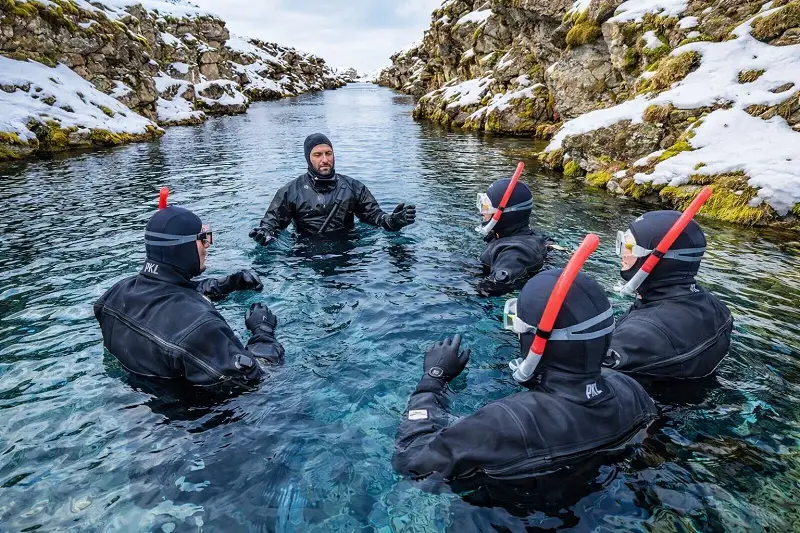
Calm, structured and guided
There is time to prepare, time in the water, and time to warm up afterward. Knowing the flow in advance makes the experience easier to enjoy.
The day moves at a steady, predictable pace.
A visit to Silfra follows a clear, guided routine. Because the site is inside a protected national park, every step is planned for safety and conservation.
First-time visitors often find the experience calmer and more structured than expected. There is time to prepare, time in the water, and time to warm up afterward.
Understanding this flow in advance helps reduce stress and lets Silfra’s clarity, geology and quiet atmosphere take center stage.
From check-in to warm-up.
The Silfra day is organized in clear stages.
Guides control the pace from the first meeting point in Þingvellir National Park to the final exit from the water.
Meet the guides
Most tours begin at a fixed meeting point. Guides check reservations and confirm basic requirements such as age and comfort in water.
Safety briefing
The briefing covers movement in the fissure, hand signals, how to stay relaxed in cold water, and what the group will see along the route.
Drysuit fitting
Participants change into thermal layers and dry suits. This step takes time, especially for first-time visitors, but guides assist closely.
Equipment check
Masks, fins and seals are adjusted before the group walks to the entry point. A good fit makes a big difference in comfort.
Guided route
Once in the water, the group moves slowly through the fissure. Guides lead, monitor spacing and keep the pace calm.
Exit and warm up
After the route, participants leave the water together, return equipment, change back into dry clothes and often enjoy a warm drink.
Changing into dry suits is part of the experience.
After the briefing, participants change into thermal layers and dry suits. This can take longer than expected because the fit needs to be careful and secure.
A well-fitted dry suit helps keep the body insulated. Hands and face still feel cool, but the core stays protected from the cold water.
Only when everyone is ready do guides lead the short walk toward the entry point.
The preparation stage is deliberate, not rushed. It helps first-time visitors feel supported before entering the water.
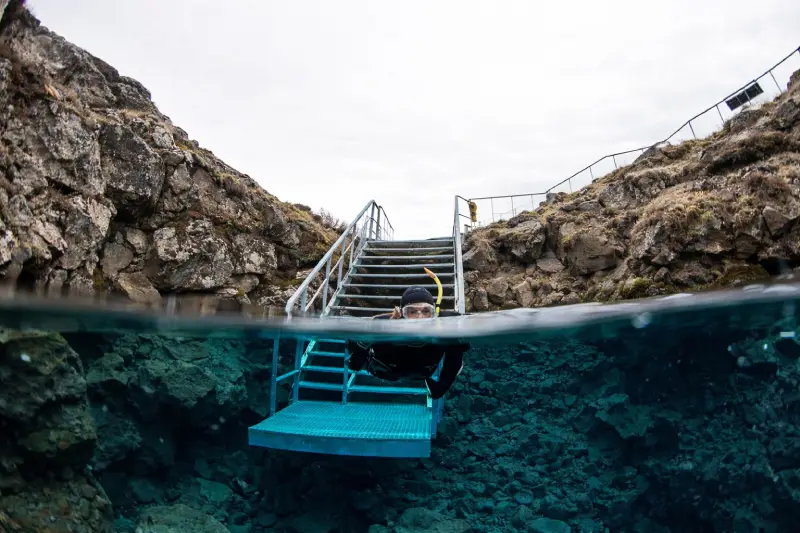
Entry and exit points use controlled access such as steps, platforms or ladders. Guides assist with balance and fins where needed.
The water entry is controlled and gradual.
Entry into Silfra requires a short walk from the changing area. The path can be uneven and sometimes icy, so guides set a slow pace and offer support.
At the water’s edge, visitors enter using steps or a platform. This controlled entry helps people adjust to the cold gradually rather than all at once.
At the exit point, participants climb out using steps or ladders. Afterward, there is another short walk back to the changing area. For route details, read the Silfra sections guide.
The session is not long, but the visibility makes it feel full.
Time in the water is limited because Silfra is cold year-round. Most snorkeling sessions last about 30 to 45 minutes, while scuba dives may be slightly shorter depending on conditions and certification level.
Why the water time is enough
Because visibility is extremely high, visitors can see far more in a short period than in many warmer snorkeling locations. Distance covered matters more than time spent.
Total visit time is longer
Including check-in, briefing, changing, the short walks and the water session, most visits take two to three hours from start to finish.
Visitors often notice the same four things first.
The cold is manageable
Most visitors expect the cold to feel intense, but are surprised by how effective the dry suits are.
Floating feels easy
The dry suit adds buoyancy, so snorkeling at the surface often requires very little effort.
The environment is quiet
There are no waves, boats or marine animals. The focus is on rock formations, light and clarity.
The guidance is constant
There is little decision-making required, which helps reduce anxiety for people new to cold-water activities.
The pace is slow
Silfra tours move slowly by design to protect the site and keep groups together.
The geology feels different
Unlike tropical snorkeling, Silfra is about freshwater clarity, lava rock, depth and the rift itself.
Small choices make the day more comfortable.
Arrive early so you are not rushed during check-in or dry suit fitting. Being calm before the briefing makes the whole experience easier.
Wear simple thermal layers and avoid bulky clothing, which can restrict movement inside the suit. A light meal beforehand can also help with energy and warmth.
Listen closely to the briefing. Small details, such as body position and how to relax in the water, make a noticeable difference.
Quick comfort checklist
- Arrive early and avoid rushing.
- Wear thin, insulating thermal layers.
- Avoid bulky clothing under the dry suit.
- Eat a light meal before the activity.
- Follow guide instructions during entry, route and exit.
Connect this day-of guide with the rest of your Silfra planning.
Use the existing site URLs to move from expectations to route details, conservation rules, location planning and the guided tour page.
Understand the route
Read the Silfra sections guide to see how the entry, Hall, Cathedral, Lagoon and exit connect.
Plan arrival and protection rules
Use Location and Directions for arrival details and Geology and Conservation for why access is controlled.
Ready to experience Silfra with a clear plan?
A guided Silfra visit is calm, organized and predictable. Once you understand the flow of the day, you can focus on the fissure, the clarity and the feeling of floating between volcanic rock walls.