Silfra Fissure Geology and Conservation
Understand why Silfra is one of Iceland’s most important freshwater fissures, how the continental plates shaped it, and why visitor access is carefully controlled inside Þingvellir National Park.
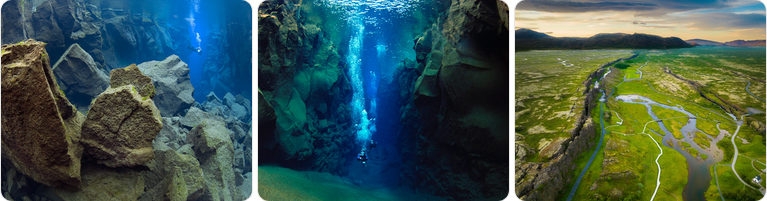
A rare underwater rift
Silfra sits on the boundary between the North American and Eurasian tectonic plates, with glacial water filtered through lava rock before it reaches the fissure.
One of the clearest and most protected freshwater sites in the world.
The Silfra fissure is one of the most geologically significant and carefully protected freshwater sites in the world. Located in Þingvellir National Park, Silfra lies directly on the boundary between the North American and Eurasian tectonic plates.
What makes it extraordinary is not only its location but also its crystal-clear glacial water, slow geological movement, and strict conservation rules that preserve it for future generations.
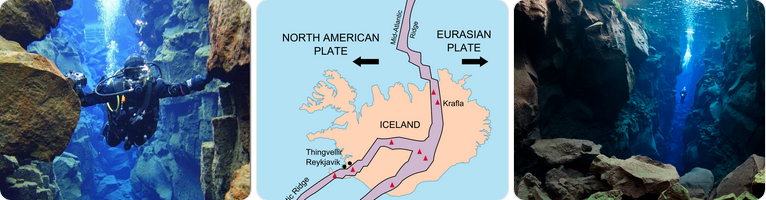
Created by continental drift and shaped by filtered glacial water.
Silfra is a tectonic fissure created by the gradual separation of two continental plates. Iceland sits on the Mid-Atlantic Ridge, where these plates move apart by approximately 2-2.5 cm, about 1 inch, per year.
Over centuries, this movement created cracks and rifts in the lava fields of Þingvellir. The fissure is filled with cold freshwater that originates from Langjökull glacier and travels underground through porous lava rock for 30-100 years before reaching Silfra.
Why visibility often exceeds 100 meters
Silfra is often described as having some of the clearest water on Earth. Its clarity is the result of geology, not tropical climate or ocean currents.
Very low sediment
The water contains almost no suspended particles after decades of natural filtration through lava rock.
Cold, stable water
Low temperatures reduce biological growth, helping the water remain clean and visually consistent year-round.
No direct river inflow
No rivers flow directly into the fissure, so the water is not regularly disturbed by heavy sediment loads.
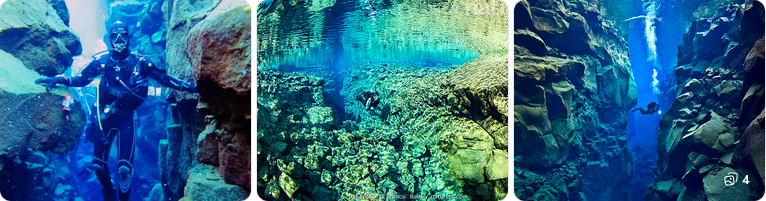
The four main sections of Silfra
Silfra is not a single crack but a connected system of fissures, each shaped by tectonic movement and water erosion.
The route reveals narrow channels, wider open areas, dramatic vertical walls, and a calmer lagoon exit.
Silfra Big Crack
The narrow entry channel where the plate boundary feels closest and the dark lava walls create a dramatic start.
Silfra Hall
A wider section where the fissure opens and long sightlines make the water clarity especially noticeable.
Silfra Cathedral
The deepest and most dramatic area, with vertical walls and large boulders shaped by the rift.
Silfra Lagoon
A shallow, sandy exit area where water slows, light increases, and the route becomes calmer.
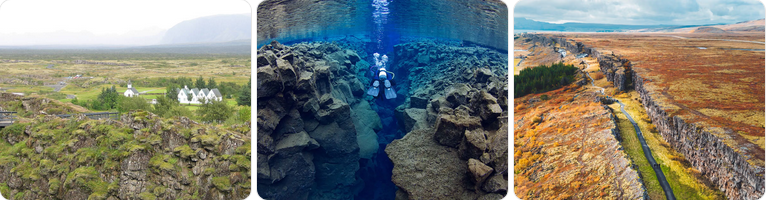
Why Silfra is a conservation site
Silfra is located within a UNESCO World Heritage Site, where access and activities are regulated under strict conservation standards.
These protections safeguard geological formations that cannot regenerate once damaged, preserve one of the cleanest freshwater systems on Earth, and protect an ecosystem that recovers extremely slowly due to cold temperatures and minimal biological activity.
How conservation shapes every visit
The rules at Silfra are practical conservation measures. They reduce physical contact, protect water quality, and keep visitor movement controlled in a fragile freshwater rift.
Why guided tours are required
- They help prevent environmental damage.
- They improve safety in cold water.
- They provide geological and environmental interpretation.
What is restricted
- Independent snorkeling or diving is not permitted.
- Physical contact with rock walls is prohibited.
- Food, sunscreen, and unsecured personal objects are kept out of the water.
Because Silfra’s environment is so fragile, even minor disturbances such as standing on rocks, stirring sediment, or introducing foreign substances can cause long-lasting damage. All visitors must enter the fissure as part of a guided tour.
Why conservation matters beyond Iceland
Silfra is a living geological boundary. Few places on Earth allow direct observation of continental drift in a submerged, accessible environment.
A rare scientific and travel reference point
- A rare scientific reference point
- One of the world’s clearest freshwater systems
- A benchmark for sustainable tourism in fragile environments
Plan a Silfra visit that respects the fissure.
Choose a guided activity, understand the rules before entering the water, and use the site in a way that protects Silfra’s clarity, rock formations, and long-term conservation value.