A visit to Silfra follows a clear, guided routine. Because the site is inside a protected national park, every step is planned for safety and conservation. As a result, first-time visitors often find the experience calmer and more structured than expected.
Overall, the day moves at a steady pace. There is time to prepare, time in the water, and time to warm up afterward. Knowing this flow in advance helps reduce stress and makes the experience more enjoyable.
Step-by-Step Experience Overview
First, most tours begin at a fixed meeting point in Þingvellir National Park. Guides check reservations and confirm basic requirements, such as age and comfort in water.
Next, guides give a safety briefing. It covers movement in the fissure, hand signals, and how to stay relaxed in cold water. In addition, they explain the route and what you will see along the way.
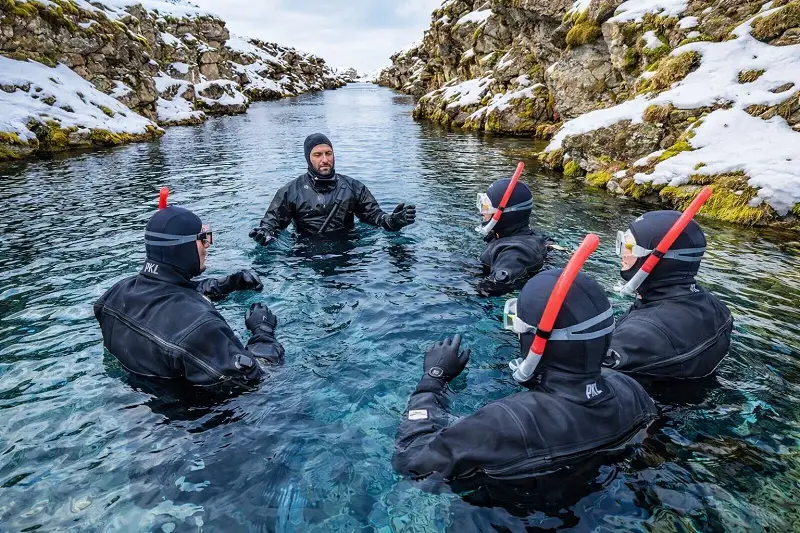
Afterward, participants change into thermal layers and dry suits. This step takes time, especially for first-time visitors. However, guides assist closely to ensure a proper fit. A well-fitted dry suit makes a big difference in warmth and comfort.
Then, guides perform a final equipment check. Masks, fins, and seals are adjusted as needed. Only when everyone is ready does the group walk to the entry point.
Once in the water, the group moves slowly through the fissure. The pace is controlled and calm. Guides lead from the front and monitor from behind. As a result, visitors can focus on floating, breathing, and observing the surroundings.
Finally, after completing the route, the group exits the water together. Equipment is returned, and participants change back into dry clothes. Many tours also include a warm drink, which helps restore body heat.
How Long You Are in the Water
Time in the water is limited due to temperature. Most snorkeling sessions last about 30 to 45 minutes. Scuba dives may be slightly shorter, depending on conditions and certification level.
Although this may sound brief, the time is usually enough. Because visibility is extremely high, visitors see far more in a short period than in many warmer locations. In other words, distance covered matters more than time spent.
In addition, guides plan routes carefully. They avoid rushing while still keeping groups warm. As a result, most visitors report feeling ready to exit by the end of the session.
It is also important to note that the total tour time is much longer. Including preparation, briefings, and changing, most visits take two to three hours from start to finish.
Entry, Exit, and Surface Time
Entry into Silfra requires a short walk from the changing area. The path is uneven and sometimes icy. However, guides set a slow pace and offer support where needed.
At the water’s edge, visitors enter using steps or a platform. Handrails are often present. This controlled entry helps people adjust to the cold gradually rather than all at once.
Once in the water, time is divided between steady movement and brief pauses. For snorkelers, pauses happen at the surface. These moments allow guides to check the group and adjust spacing.
Meanwhile, divers may stop at fixed points to manage buoyancy and direction. These pauses are planned and not rushed. As a result, the experience feels structured rather than chaotic.
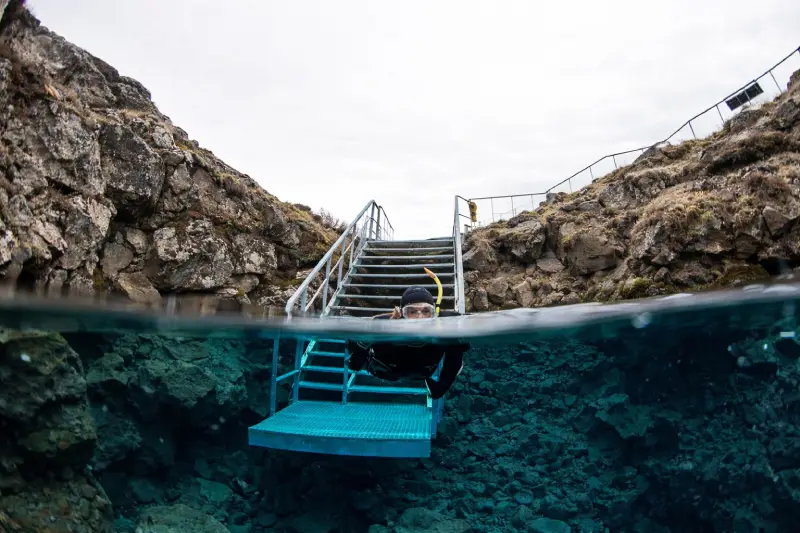
At the exit point, participants climb out using steps or ladders. Guides assist again, especially with fins and balance. Afterward, there is another short walk back to the changing area. If you want to know about the sections, read here.
What First-Time Visitors Often Notice
First-time visitors often expect the cold to feel intense. However, most are surprised by how effective the dry suits are. While hands and faces feel cool, the body stays insulated.
Another common surprise is how effortless snorkeling feels. Because the dry suit adds buoyancy, floating requires little effort. As a result, many people relax within the first few minutes.
In addition, the environment feels quiet and slow. There are no waves, boats, or marine animals. Instead, the focus is on rock formations, light, and clarity.
Finally, many visitors notice how guided the experience is. There is little decision-making required. This structure helps reduce anxiety, especially for those new to cold-water activities.
How the Experience Differs From Other Snorkeling Sites
Silfra is not a typical snorkeling location. Unlike tropical sites, there is no swimming against currents or searching for wildlife. Instead, the experience is about visibility and geology.
Because the water is freshwater, buoyancy feels different. In addition, the dry suit changes movement slightly. However, guides account for this and provide clear instructions.
Another difference is the pace. Silfra tours move slowly by design. This is done to protect the environment and keep groups together. As a result, the experience feels more controlled than recreational beach snorkeling.
Practical Tips for the Day
First, arrive early. Being rushed makes changing into a dry suit harder and less comfortable. Extra time helps everyone start relaxed.
Next, wear simple thermal layers. Avoid bulky clothing, as it can restrict movement inside the suit. Guides usually recommend thin, insulating materials.
Also, eat a light meal beforehand. Cold water can increase energy use, so having some fuel helps maintain comfort.
Finally, listen closely to the briefing. Small details, such as how to position your body, make a big difference in comfort and enjoyment.
Overall Flow and Final Expectations
Overall, a Silfra visit is calm, guided, and predictable. Each stage follows the same general order, even if small details vary by operator or weather.
Because of this structure, first-time visitors rarely feel overwhelmed. Instead, most report feeling supported from start to finish.
Understanding the flow of the day removes uncertainty. As a result, visitors can focus on the experience itself rather than logistics.
In the end, knowing what to expect allows Silfra’s unique environment to take center stage.