The water temperature in Silfra stays low all year. It ranges between 2°C and 4°C (35–39°F). This temperature consistency is important. Guides and operators also rely on this stability when choosing equipment.
Why Silfra Water Temperature Is Always Cold
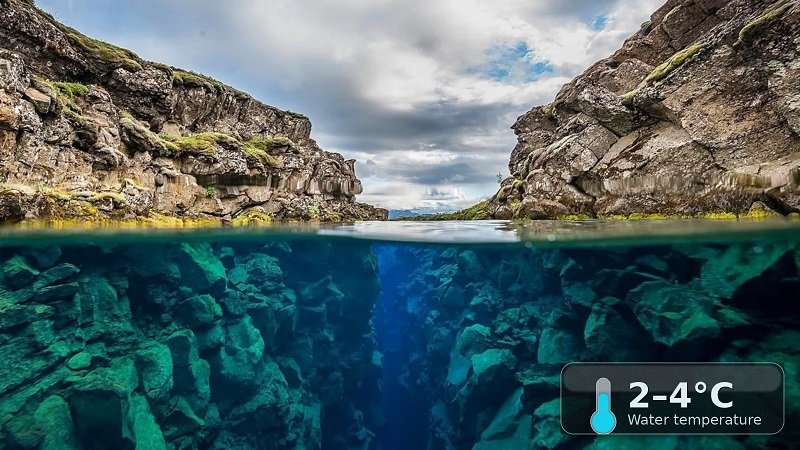
The reason for the low Silfra water temperature is simple. The water comes from Langjökull glacier and moves underground through volcanic rock. This journey takes many years.
During that time, the water cools and filters naturally. It does not absorb surface heat. Therefore, it stays cold even during long daylight hours in summer.
In addition, Silfra is connected to Þingvellir National Park’s freshwater system. This system protects the water from pollution and temperature swings.
How Cold Silfra Water Temperature Feels in Practice
Cold numbers alone do not explain the experience. The water temperature feels different because visitors wear dry suits. These suits keep the body dry and insulated.
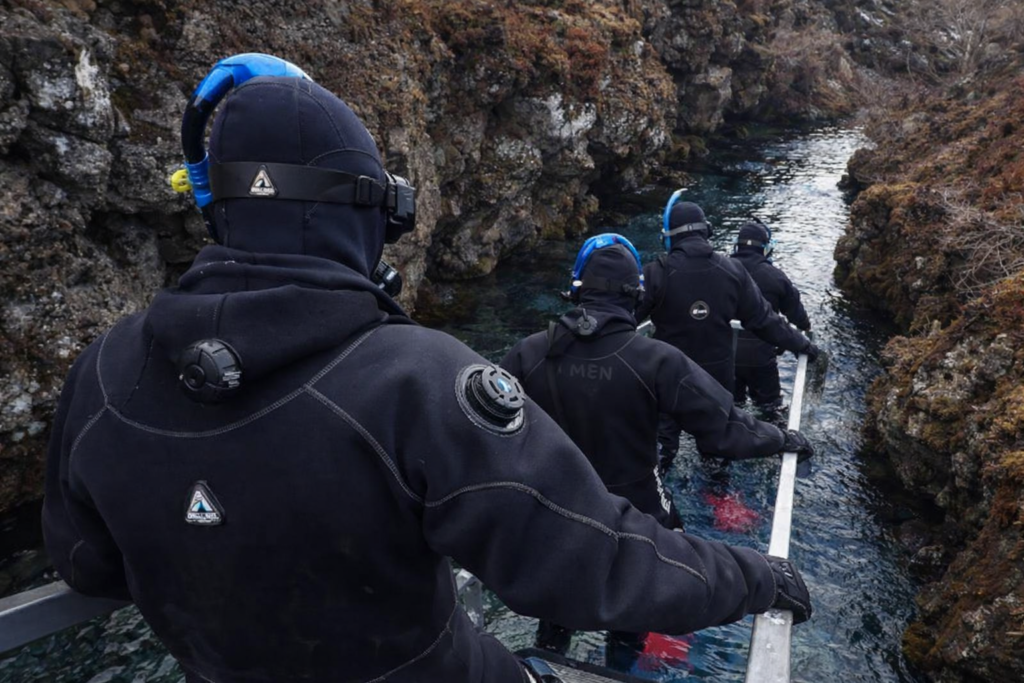
Most people feel cool on the face and hands. However, the core body usually stays comfortable. Guides check suit fit carefully before entry.
Because of the stable temperature, the body adapts quickly. After a few minutes, many visitors stop noticing the cold. Calm movement also reduces heat loss.
Air vs. Water Temperature
Air temperature changes a lot, unlike water temperature. This difference affects preparation and exit comfort.
In summer, air usually range from 10°C to 15°C (50–59°F). Sometimes, warmer days reach 18°C. However, the water remains near 2–4°C.
The biggest contrast happens during entry. Visitors may feel warm while gearing up. Once in the water, the change feels sharp but controlled.
In winter, the air temperatures often drop below 0°C (32°F). Snow and wind are common. Still, the water temperature stays stable.
Ironically, some visitors find winter easier. Ice at the surface is rare but possible in extreme cold.
How Tours Manage Comfort in Cold Water
Tour operators design the experience around the water temperature. Comfort and safety depend on strict procedures.
Dry suits are the main protection. They include seals at the neck and wrists to keep water out. Thick thermal underlayers provide insulation.
Guides also limit time in the water. A typical snorkel lasts 30–40 minutes. This timing balances comfort and visibility.
Finally, hot drinks are usually available after exit. This helps the body warm up quickly.
Safety Rules
Cold water requires clear rules. The temperature affects safety planning for every tour.
Participants must be able to float and remain calm. Panic increases heat loss and fatigue. Therefore, guides screen visitors before entry.
Time limits exist for a reason. Staying too long in cold water can cause numbness. Guides watch closely for signs of discomfort.
Touching the rock walls is also restricted. This rule protects the environment and prevents sudden cold exposure to hands.
What to Wear
Clothing choices matter even before the dry suit. Visitors usually wear thermal underwear made of fleece or wool. Cotton is not recommended because it traps moisture. Thick socks improve comfort inside fins.
Avoid bulky clothing. Tight layers reduce circulation and increase cold sensation. Guides help adjust fit to suit water conditions.
Jewelry and loose items should stay behind. Cold metal feels harsh in these water temperatures.