The Silfra Fissure is not a single crack in the ground. Instead, it is a complex underwater system made up of several connected sections. Each section differs in size, depth, flow, and overall character. As snorkelers or divers move through Silfra, the experience changes step by step.
Overall, the Silfra area covers roughly 600 by 200 meters. From the main parking area to the entry platform, visitors walk about 100 meters. From there, the underwater route follows a natural flow shaped by geology, water pressure, and gravity.
Understanding how these sections connect helps explain why Silfra feels dynamic rather than uniform.
The Pool and the Silfra Cave – A Restricted and High-Risk Area
Between the parking area and the main platform lies a pool that connects to the Silfra cave system. This cave extends back underneath the road above. The deepest known point in the cave reaches at least 63 meters, making it one of the deepest parts of the Silfra system.
However, this cave is not part of standard snorkeling or diving tours. It has only been explored by a very small number of experienced cave divers. The risks are significant. The passages can be extremely narrow, visibility can change quickly, and the rock formations may be unstable.
In addition, the cave has been mapped by American cave divers, but the structure may have shifted due to earthquakes. Because of these factors, the Silfra cave is considered a high-risk environment and remains closed to normal visitors.
The “Toilet” Tunnel – A Powerful and Rarely Used Passage
From the same pool, a tunnel leads in the opposite direction toward the main Silfra fissure. This tunnel is commonly known as “the toilet.” The name comes from the way water and divers are forced through it.
To enter this tunnel, a diver must descend head first, vertically, to a depth of about 16 meters. All water flowing from the Silfra cave into the main fissure must pass through this single narrow opening. As a result, the current inside the tunnel is very strong.
This current can flush divers through the tunnel with force. Because of this, the swim-through is rarely attempted. It is only done by highly experienced divers with cavern-diving skills. Even then, strict conditions apply. Divers must have previously dived with the same operator and proven their ability.
For snorkelers and most divers, this tunnel remains unseen but plays an important role in how water moves through Silfra.
Entry Platform and the Start of the Main Route
Directly beneath the main platform, where regular snorkeling and diving tours enter the water, lies the exit point of the toilet tunnel. From this point, the accessible Silfra route begins.
From here, it is a short swim of about 30 meters to reach the next major section, Silfra Hall. The water here is already extremely clear, and the sense of depth begins to increase.
This transition marks the shift from restricted cave environments to the open fissure route used on guided tours.
Silfra Hall – Structured, Deep, and Geologically Complex
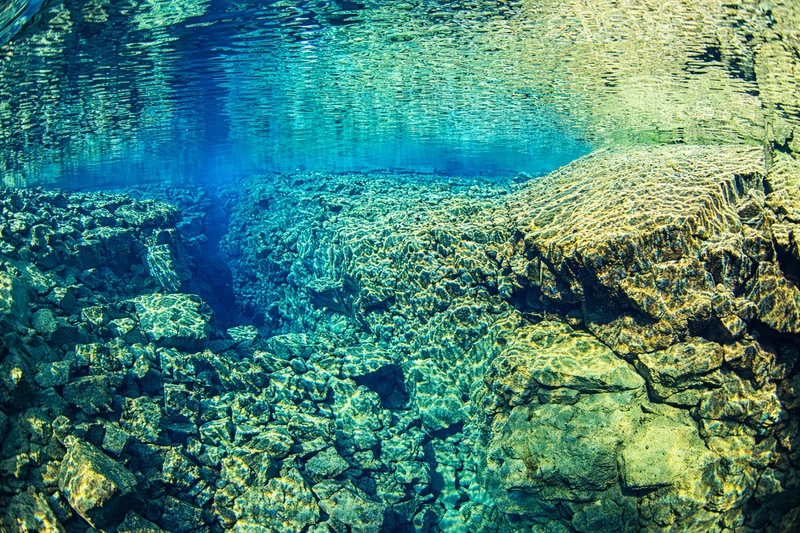
Silfra Hall is a long, corridor-like section that leads deeper into the fissure system. It connects the platform area to the larger sections beyond. The rock walls rise steeply, and the space feels defined and directional.
Silfra Hall also leads into parts of a cave system that can reach depths of up to 45 meters. In certain areas, experienced divers can perform swim-throughs beneath rocks and boulders at different depths. However, these options depend on conditions and diver qualifications.
From Silfra Hall, it is roughly a 200-meter swim to reach Silfra Cathedral. Along the way, divers often move up and down. In several spots, large rocks have become wedged into the fissure at shallow depths, requiring divers to swim over them.
This changing depth adds variety and reinforces the sense of scale.
Silfra Cathedral – Wide, Deep, and Visually Striking
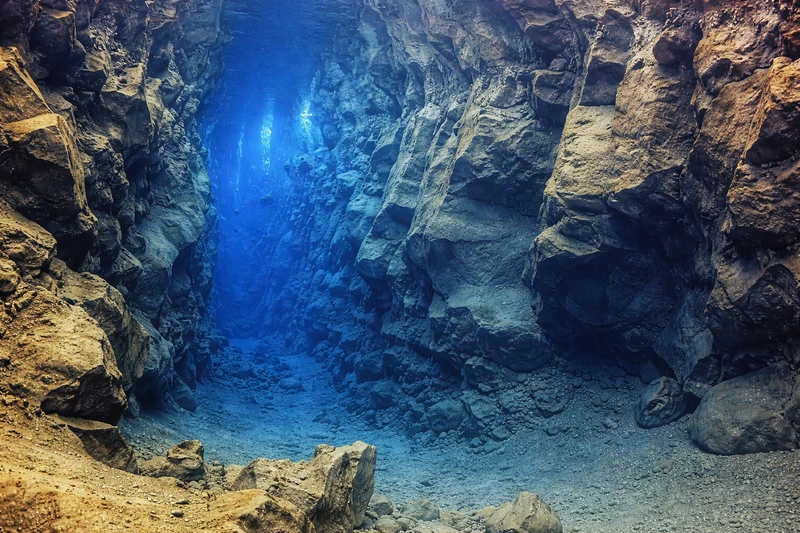
Silfra Cathedral is often considered the most dramatic section of the fissure. Here, the space opens up, and the lava rock walls fall almost straight down.
The deepest point of the Cathedral is around 20 meters, making it accessible and visually impressive for both divers and snorkelers. From one end of the Cathedral to the other, the distance is about 100 meters. On clear days, visitors can see straight across from end to end.
This long, open view is rare underwater. As a result, many describe the Cathedral as the emotional high point of the experience.
At the end of the Cathedral, a sand slope rises toward a depth of about 2 to 3 meters. From here, the current becomes stronger and begins to pull divers and snorkelers toward the lake.
If they miss the left turn into Silfra Lagoon, they are carried directly out into the open lake.
Silfra Lagoon – Wide Visibility and a Calm Finish
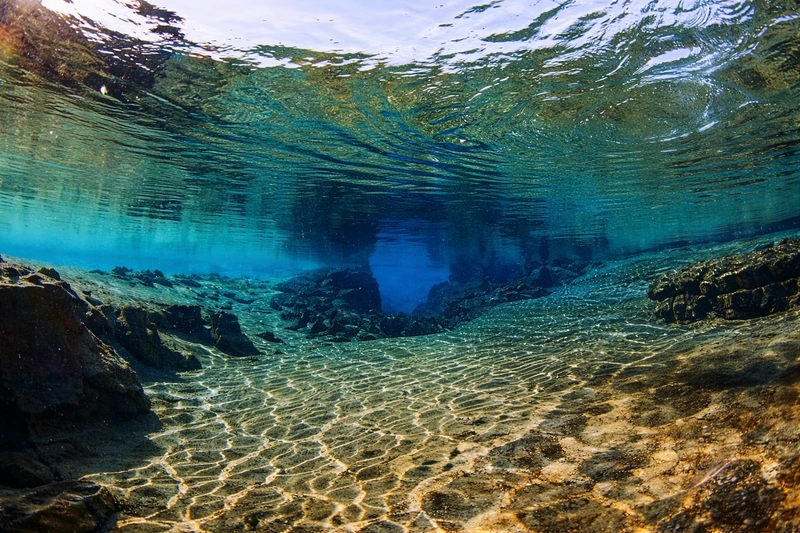
Silfra Lagoon is the next major highlight. This section is known for having the most obvious sense of visibility. From one side of the lagoon to the other, the distance measures about 120 meters, and it is often possible to see the entire width clearly.
The lagoon feels open, bright, and calm compared to the deeper sections before it. The bottom is shallower, and light reaches more easily across the area.
For both snorkelers and divers, this section offers a relaxed finish after the more dramatic parts of the fissure.
Exit Point and the Walk Back
At the far side of Silfra Lagoon is the exit point. From here, divers and snorkelers leave the water and begin the walk back to the parking area.
The hike is often steeper and more demanding than expected, especially after time spent in cold water. As a result, many people notice the effort and warmth returning quickly.
It is important to stay on marked paths during this walk. The surrounding mosses and grasses are fragile and recover very slowly if damaged.
How These Sections Create the Silfra Experience
Together, these sections form a clear and logical progression. The route moves from restricted cave systems to structured corridors, then into wide cathedral-like spaces, and finally into an open lagoon.
Because each section has a distinct role, Silfra never feels repetitive. Instead, it feels like a continuous journey shaped by geology and water flow.
Understanding this structure helps visitors appreciate why Silfra is considered one of the most unique freshwater dive and snorkel sites in the world.