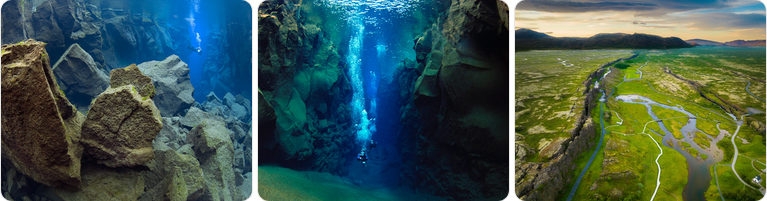
The Silfra fissure is one of the most geologically significant and carefully protected freshwater sites in the world. Located in Þingvellir National Park, Silfra lies directly on the boundary between the North American and Eurasian tectonic plates. What makes it extraordinary is not only its location but also its crystal-clear glacial water, slow geological movement, and strict conservation rules that preserve it for future generations.
A Geological Overview
Silfra is a tectonic fissure created by the gradual separation of two continental plates. Iceland sits on the Mid-Atlantic Ridge, where these plates move apart by approximately 2–2.5 cm (about 1 inch) per year. Over centuries, this movement created cracks and rifts in the lava fields of Þingvellir – Silfra being the most famous and accessible.
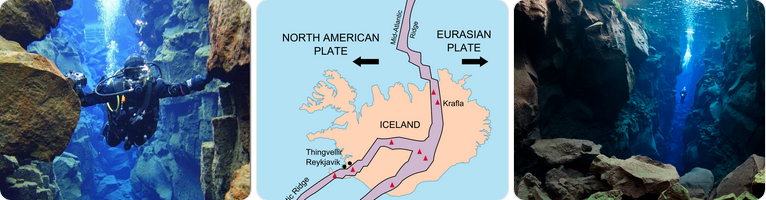
The fissure is filled with cold freshwater that originates from the nearby Langjökull glacier. The water travels underground through porous lava rock for 30–100 years before reaching Silfra, a natural filtration process that removes sediment and impurities.
Why Visibility Exceeds 100 Meters
Silfra is often described as having some of the clearest water on Earth. Visibility commonly exceeds 100 meters (328 feet) because:
- The water contains almost no suspended particles
- There is minimal biological growth due to low temperatures
- No rivers flow directly into the fissure
Unlike tropical dive sites where clarity depends on sunlight and currents, Silfra’s visibility is the result of geology, not climate.
The Four Main Sections of Silfra
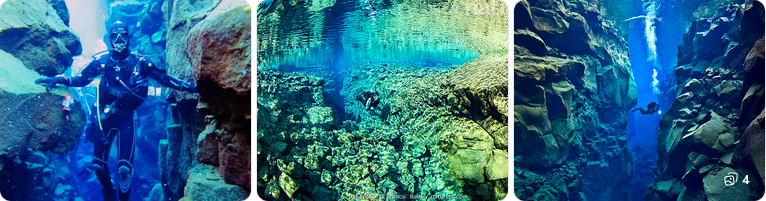
Silfra is not a single crack but a connected system of fissures, each shaped by tectonic movement and water erosion.
- Silfra Big Crack – this narrow entry channel clearly shows the plate boundary. The rock walls here are closest together, visually emphasizing continental drift.
- Silfra Hall – A wider section formed as lava fractured unevenly. The floor here is smoother, shaped by centuries of slow water flow.
- Silfra Cathedral – The deepest and most dramatic area, reaching up to 18 meters (59 feet). Vertical walls and massive boulders reveal how lava layers collapsed as the plates pulled apart.
- Silfra Lagoon – A shallow, sandy exit area where mineral deposits settle. This zone shows how water slows and spreads as it leaves the fissure system.
Each section illustrates a different stage of tectonic and hydrological interaction.
Why Silfra Is a Protected Conservation Site
Silfra is located within a UNESCO World Heritage Site, which means access and activities are regulated under some of the strictest conservation standards in Iceland. These protections exist to safeguard geological formations that cannot regenerate once damaged, to preserve one of the cleanest freshwater systems on Earth, and to protect an ecosystem that recovers extremely slowly due to cold temperatures and minimal biological activity.
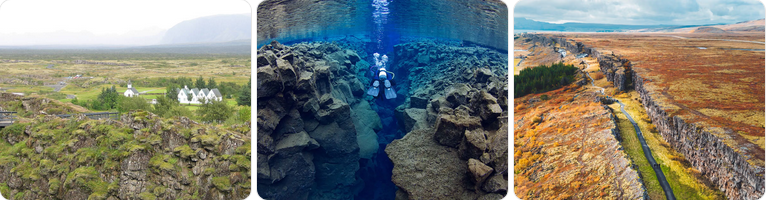
Because Silfra’s environment is so fragile, even minor disturbances – such as standing on rocks, stirring sediment, or introducing foreign substances – can cause long-lasting or irreversible damage. For this reason, all visits to Silfra are tightly controlled. Independent snorkeling or diving is not permitted, and all visitors must enter the fissure as part of a guided tour.
Physical contact with the rock walls is prohibited, as oils, friction, and pressure can damage surfaces that have taken thousands of years to form. Items such as food, sunscreen, and unsecured personal objects are also banned from the water to prevent contamination.
These rules are not symbolic or optional. They are essential conservation measures, reflecting the reality that once Silfra is harmed, it cannot be restored.
How Conservation Shapes Visitor Access
Guided Tours Only: Pros and Cons
Pros
- Prevents environmental damage
- Ensures safety in cold water
- Provides geological and environmental interpretation
Cons
- Less flexibility for experienced swimmers
- Higher cost than unguided sites
- Fixed group schedules
Alternative: Visitors seeking more freedom may consider snorkeling or diving in Icelandic lakes outside national parks, but none offer Silfra’s clarity or tectonic setting.
Why The Conservation Matters Globally
Silfra is a living geological boundary. Few places on Earth allow direct observation of continental drift in a submerged, accessible environment. Damage here would mean losing:
- A rare scientific reference point
- One of the world’s clearest freshwater systems
- A benchmark for sustainable tourism in fragile environments
The strict conservation model used at Silfra is now studied as a best-practice example for managing high-value natural sites worldwide.