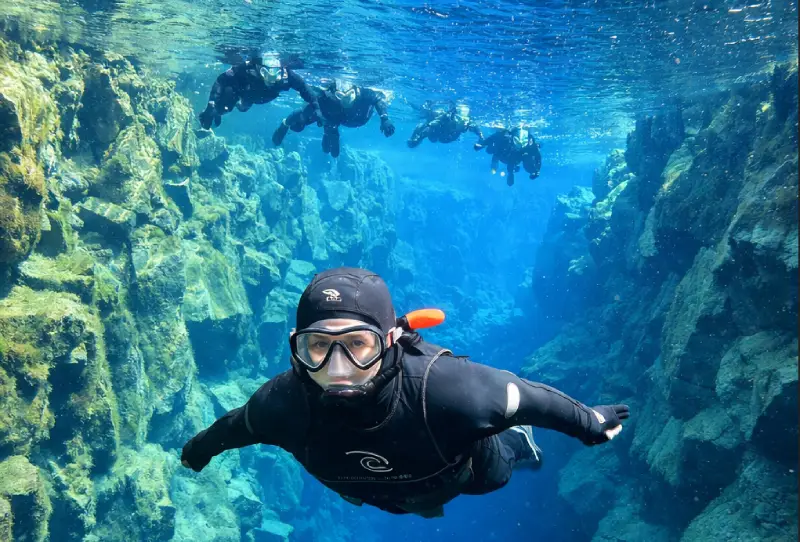
Snorkeling in Silfra’s cold-water is an experience that allows visitors to float through a narrow freshwater fissure with extreme visibility. The activity is guided from start to finish. It is designed for people who want to see below the water without diving or using tanks.
What Silfra Snorkeling Actually Is
Silfra snorkeling is not swimming long distances and it is not a physical challenge. Participants float face-down on the surface while wearing a dry suit that keeps the body warm and buoyant.
Movement is slow and controlled. Most propulsion comes from gentle fin kicks rather than active swimming. Guides control the pace and ensure spacing between participants.
The experience is quiet and structured. There are no waves, no currents, and no marine life. The focus is visibility and space.
Why People Choose Snorkeling Instead of Diving
Snorkeling is the most accessible way to experience the fissure. No certification is required. No heavy equipment is used. Preparation time is shorter, and participants remain at the surface at all times.
For many visitors, snorkeling offers the same visual reward as diving because the water is so clear. Depth can be seen easily from the surface, making descent unnecessary.
Visibility and Underwater Clarity
Visibility in the fissure often exceeds 100 meters. This allows snorkelers to see rock formations far ahead and far below.
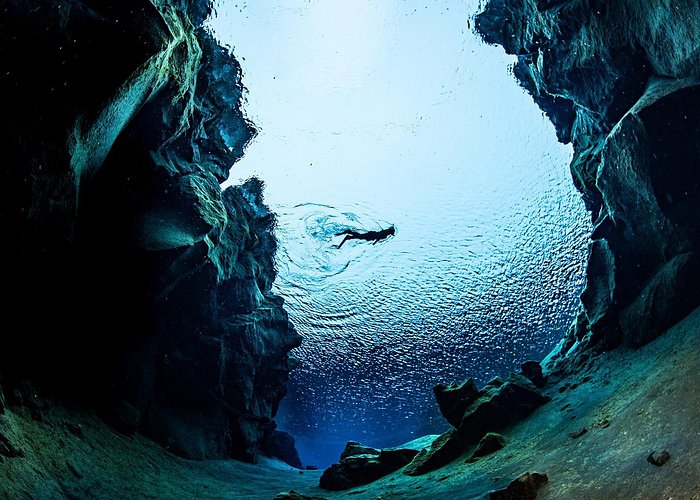
The clarity comes from natural filtration. Water moves slowly underground through lava rock before entering the fissure. This removes sediment and particles.
Because the water is constantly refreshed, visibility remains stable year-round.
Water Temperature and Cold Exposure
Water temperature stays between 2°C and 4°C throughout the year. Because of this, snorkeling is done in a dry suit. The suit keeps the body dry while trapping air for insulation. Thermal layers are worn underneath.
The face is exposed to the water. Hands are protected with thick gloves. Most people feel cold on the lips and cheeks at first, but the sensation fades quickly.
How Dry Suits Work for Snorkeling
Dry suits used for snorkeling are different from wetsuits. They are fully sealed at the neck and wrists. Water does not circulate inside the suit. Air trapped inside provides insulation and buoyancy.
Proper fit is essential. A suit that is too loose will reduce warmth. A suit that is too tight can feel restrictive. Guides assist with fitting and adjustments before entry.
Physical Requirements for Participants
Snorkeling in Silfra is physically light, but some basic requirements apply.
Participants must:
- Be comfortable floating in water
- Be able to swim
- Fit within size limits for dry suits
- Be in normal physical condition
Strong swimming ability is not required. Calmness in water is far more important.
Age Limits and Medical Considerations
Most snorkeling tours allow participants from age 12 and up. There is no maximum age, but older participants may need medical approval. This is a precaution related to cold exposure and dry suit use. Pregnant participants are not permitted to enter the water.
What the Snorkeling Route Looks Like
The snorkeling route follows a natural path through the fissure. It begins in a narrow section where rock walls feel close. The route then opens into wider areas where depth increases and visibility becomes more dramatic.
At certain points, the bottom drops away sharply. Even from the surface, the depth is clearly visible. The route ends in a calmer, wider area with open views.
Depth Perception While Snorkeling
Although snorkelers stay at the surface, depth is a key part of the experience.
Some sections reach over 20 meters deep. The water is so clear that depth does not feel intimidating. Instead, it creates a sense of floating above open space.
Light behaves differently at depth. Colors fade gradually, giving the water a layered appearance.
Group Size and Guided Structure
Snorkeling is guided and regulated. Groups are small. Each guide is responsible for a limited number of snorkelers. This allows close supervision and consistent pacing.
Guides control entry, route progression, and exit. They also assist participants who feel uncertain or need adjustments.
Entry and Exit From the Water
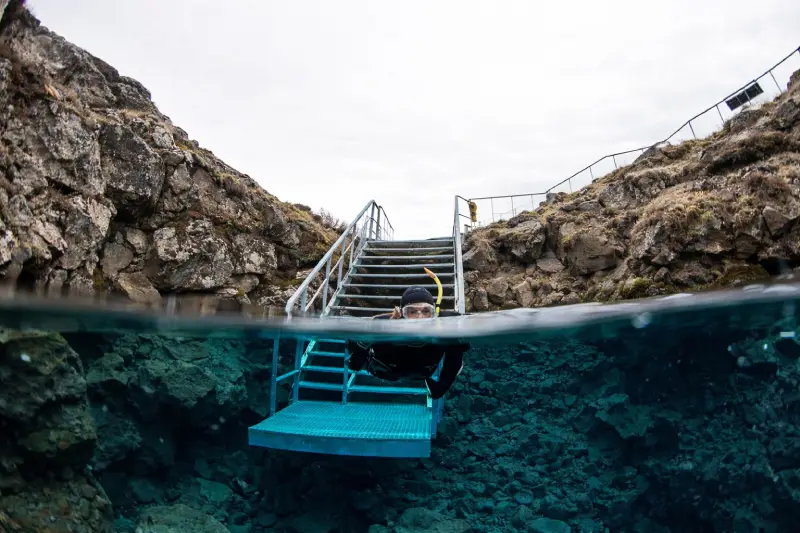
Entry happens from a fixed platform. Participants enter one by one under guide instruction. Once in the water, they float and wait until the group is ready to move.
Exit occurs at a different platform. From there, participants walk back to the changing area to remove equipment.
This system minimizes congestion and protects the environment.
Environmental Rules During Snorkeling
The fissure is protected.
Snorkelers must:
- Avoid touching rocks
- Stay horizontal
- Avoid kicking sediment
- Never stand on the bottom
These rules preserve visibility and prevent damage to fragile formations.
What It Feels Like to Snorkel in Silfra
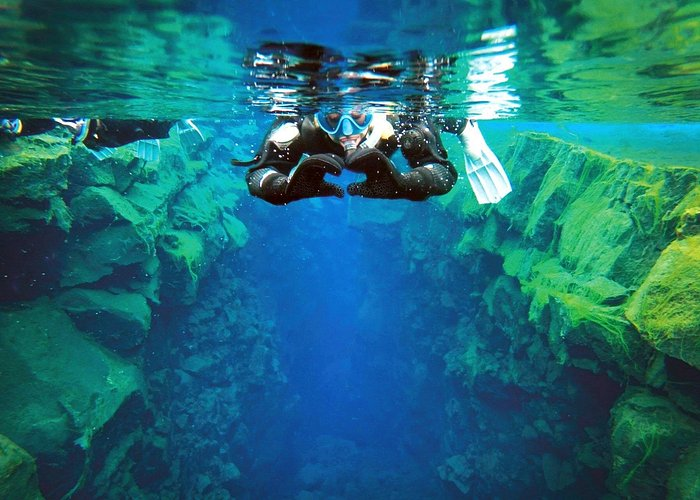
The sensation is closer to floating than swimming. The dry suit keeps the body buoyant. Movement is slow and effortless. Many participants describe the experience as calm and meditative.
There is little noise. Breathing through the snorkel becomes rhythmic. Visual focus shifts naturally to the space below.
Clothing and What to Bring
Participants should bring:
- Long thermal underwear
- Thick socks
- Weather-appropriate outer clothing
- Contact lenses if needed
Jewelry and loose items should be left behind. Changing facilities are limited, so arriving partially dressed in base layers is recommended.
Weather and Seasonal Conditions
Snorkeling operates year-round. Air temperature varies by season, but water temperature does not change. Winter air feels colder before and after the activity, but the experience in the water is the same.
Visibility remains consistent in all seasons.
Time Commitment on the Day
Time on site is usually 2.5 to 3 hours.
This includes:
- Check-in
- Suit fitting
- Safety briefing
- Time in the water
- Equipment removal
Actual snorkeling time is typically 30–45 minutes.
Common Concerns and Misunderstandings
Many people worry about the cold. With proper equipment, cold exposure is manageable. Others worry about swimming ability. Strong swimming is not required, but calmness is essential.
Some expect tropical scenery. This is a geological experience, not a wildlife one.
Photography While Snorkeling
Visibility makes photography appealing. Some tours include photos taken by guides. Personal cameras may be allowed if they can be secured safely.
Hands-free systems are preferred to avoid dropping equipment.
Who This Experience Is Best For
This activity suits travelers who:
- Enjoy quiet experiences
- Are curious about natural environments
- Prefer guided, structured activities
It is less suitable for those who dislike cold conditions or confined clothing.
Is Silfra Snorkeling Worth It?
For visitors seeking something rare and calm, the experience stands out. It offers a perspective that cannot be achieved from land and does not require technical skills.
This is not an adrenaline activity. It rewards patience and curiosity. Those who arrive prepared and relaxed often find it deeply memorable.